
Teams
・
.
.
We do not replace engineers
A conversation with Joe, Strategic Planning Team — MODI Factory
Joe is a PM on the Strategic Planning Team for MODI Factory. With a background in robotics and computer engineering and hands-on field experience, he understands engineers’ needs and challenges well.
How does a product manager who has worked across both hardware fundamentals and end-user experience envision the future of MODI Factory? We sat down with Joe, who leads product strategy and management for MODI Factory.
You'll want to read this if you're:
✅ A student or junior engineer studying hardware and PCB design
✅ Curious about staying competitive and building a career in the age of AI
✅ Interested in the technical thinking behind how MODI Factory is being built
Part 1. From hardware development to PM
Could you introduce yourself and tell us about your current role on the Strategic Planning Team?
Hi, I'm Joe from the Strategic Planning Team. I lead product strategy and product management for MODI Factory. I joined the company in 2016, so — not counting the time I took off for graduate school — this is my eighth year here.
You have a long history with LUXROBO, joining in 2016 and returning after graduate school. Comparing the early days to now, what's changed the most, and what's stayed the same?
The people have changed, but it's the company culture that's shifted the most. In the early days, we were riding the momentum of our initial funding. Looking back, not every initiative worked out, and we saw colleagues come and go. Today, our business scope is much clearer and our direction is more grounded, so people approach their work with more focus and maturity.
What hasn't changed is our core: embedded technology. LUXROBO is fundamentally an IoT embedded hardware company. As we've grown, we've expanded into education, AIoT, and circuit design automation, but that deep expertise in embedded systems remains our foundation.
Having been with the company this long, which project or moment stands out to you the most?
Exhibiting at Embedded World 2026 and being named a top-three finalist in the Tools category stand out the most. The day before the show opened, while we were setting up our booth, the organizers told us about the nomination. I got to attend the ceremony on opening day when the category winner was announced.
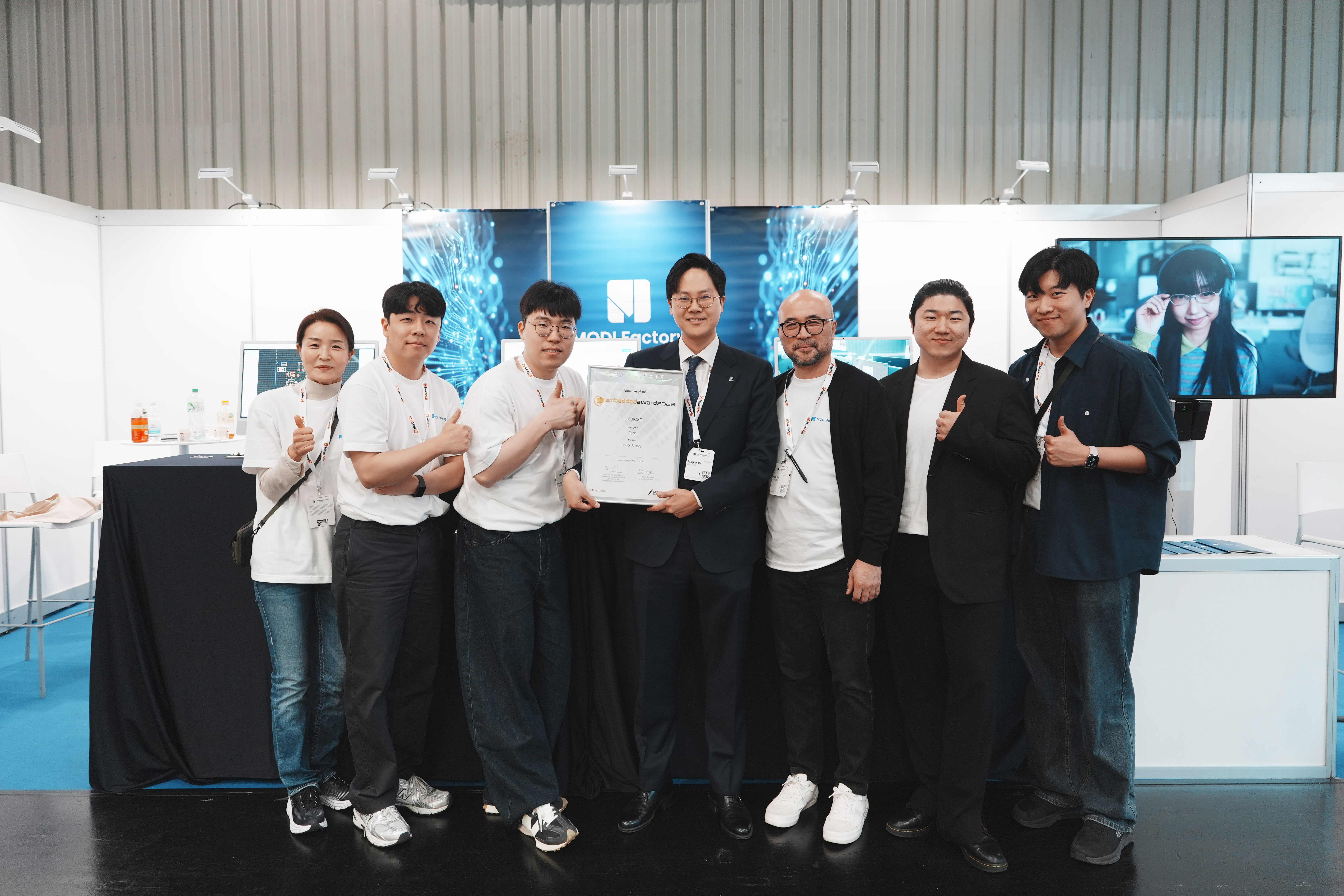
Embedded World 2026, where MODI Factory was named a global top-three finalist in the Tools (design automation) category (Source: Joe)
We didn't take first place, but we later learned no Korean company had been nominated in that category for the past three years, and we were the first EDA-related tool ever nominated in the Tools category. We'd put everything into it, so there was some disappointment, but it was still a proud milestone for the team.
You started as a robotics engineering student focused on hardware, then moved through product planning and PM roles. How has that background become a strength in your work?
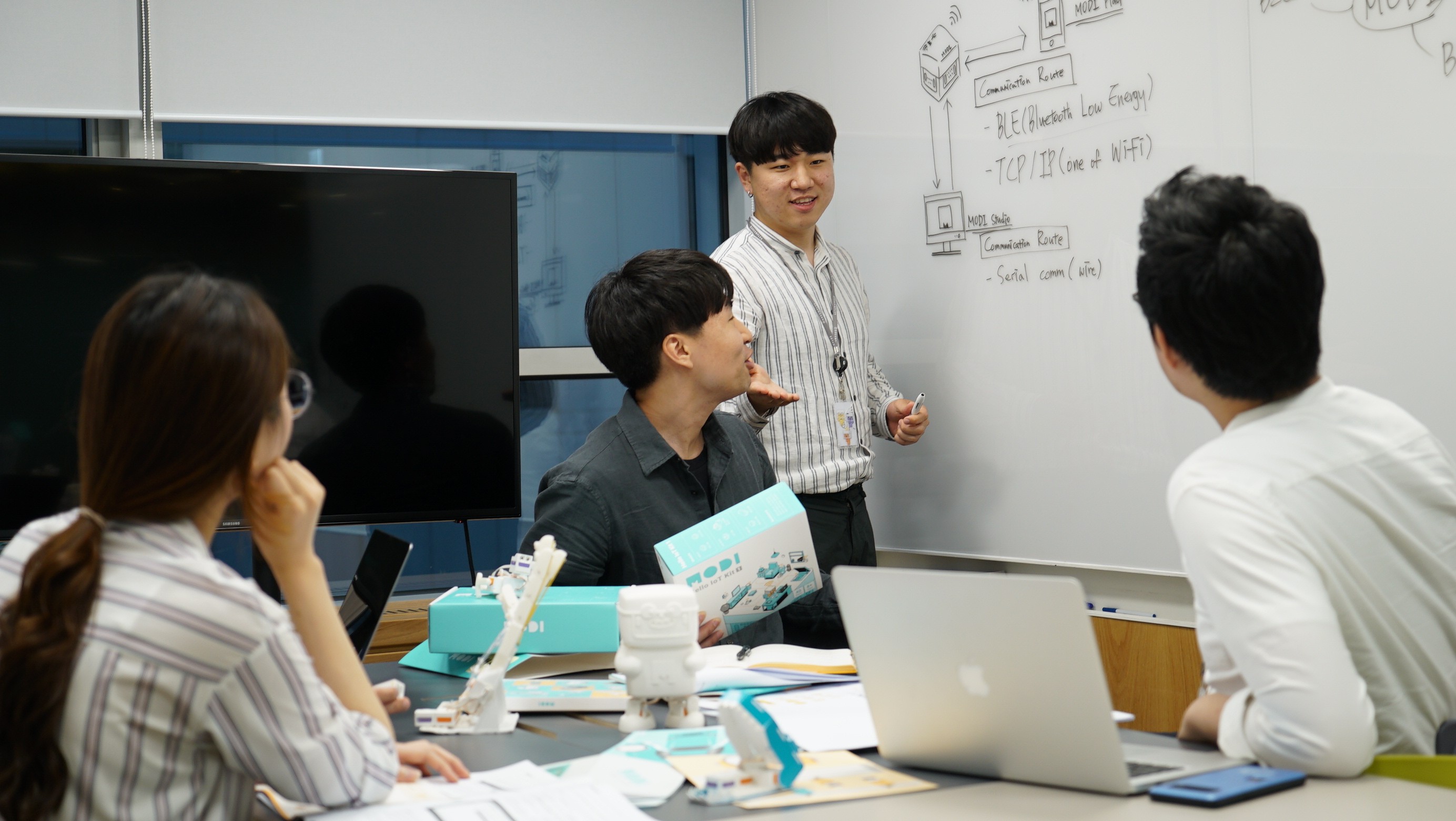
Joe, who has handled various roles including hardware design, content planning, and product planning since 2016 (Source: Joe)
Having worked across both hardware and software, and having seen the full product lifecycle, I found the PM role to be a natural fit.
These days, AI has boosted productivity across every field. Competitiveness isn't just about mastering a specific tool or writing code anymore; it comes from applying deep domain knowledge across a broader scope of work. In an era where AI automates the repetitive parts, I'm constantly thinking about what additional capabilities I need to build to stay competitive as a PM.
Part 2. The birth and vision of MODI Factory
When you were planning MODI Factory, what pain points did you identify in the existing PCB design market, and where did you focus to solve them?
PCB design isn't just routine technical work — it's a kind of artwork. People often say AI and robots struggle to match human artistry, and PCB design carries some of that same challenge: it's hard for AI to fully replicate the refined intuition a human brings to a design.
So rather than trying to build an AI that designs the way a human would, MODI Factory focuses on supporting engineers through the complex decisions they have to make — cutting design time significantly by having AI generate a first-pass layout, drawing on thousands of possible component placement and routing configurations.
MODI Factory started from a vision of a one-stop platform and evolved into a solution focused on auto-placement and routing. What strategic decisions drove that pivot?
Circuit design is a nuanced process that has to balance the usage environment with manufacturing constraints. Initially, we envisioned an end-to-end platform covering the entire process.
But given the resource constraints of a startup, delivering a broad platform well right out of the gate was unrealistic. So we made the strategic call to focus first on building out our core AI engine and refining it from there, before expanding scope.
In our previous interview with Hugo from the AI Team, we covered MODI Factory's technical edge in understanding "designer intent" rather than just coordinates. How does collaboration between your team and the AI Team work?
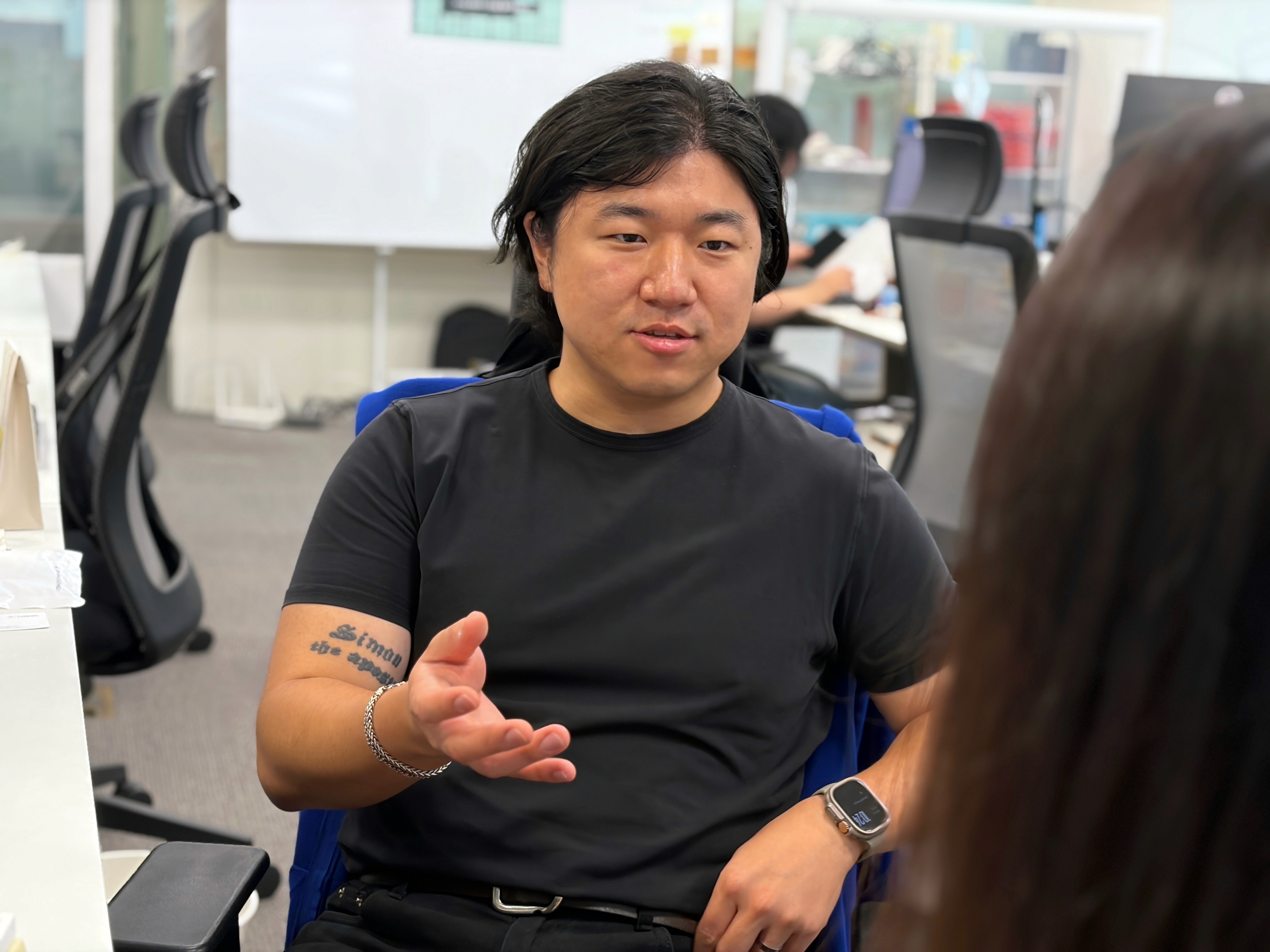
Joe discussing product improvements with a colleague
MODI Factory is an AI-driven, next-generation EDA tool, but our users are engineers who've been using traditional EDA software. Because of that, we always feel a responsibility to match the baseline features of existing tools.
From a service perspective, our Strategic Planning Team decides which traditional features to carry over and which AI capabilities will deliver real value. We then work with the AI Team to evaluate technical feasibility, collaborating closely from early planning through development.
PCB design has established competitors, and the user base is made up of experts who tend to stick with familiar workflows. What challenges did you face in convincing them of MODI Factory's value?
The EDA market has no universal file format standard. As a result, existing tools create strong lock-in effects, and engineers are naturally hesitant to switch once they've built up a component library over the years.
To break into this ecosystem, we've been closely analyzing existing EDA file formats and SDKs. Ensuring compatibility and interoperability across so many different design outputs has been our most difficult and painstaking challenge.
As an engineering graduate yourself, how do you think using an AI-based design tool like MODI Factory in school could give students a competitive edge for their portfolio or career?
Studying hardware means building physical prototypes, which costs real money and creates a high barrier to entry for individual students. With limited infrastructure, the talent pipeline for hardware developers is shrinking even as corporate demand stays high.
MODI Factory lowers that financial and technical barrier. Features like our "AI Note" give instant feedback on designs. In an environment like Korea, where hardware communities aren't very active, getting real-time AI feedback to shorten the trial-and-error cycle gives students a real competitive edge.
Part 3. Roadmap and final thoughts
Can you give us a preview of what's next for MODI Factory as it grows in the market?
Right now, MODI Factory works as an extension alongside existing EDA software. Our ultimate goal is to become a full standalone EDA tool with native editing capabilities.
Later this year, we'll launch a feature that lets users manually lock and position specific components before running auto-placement. Next year, we'll begin rolling out our own standalone editor, step by step.
What advice or encouragement would you give to students or junior engineers still placing components manually in tools like KiCad or EasyEDA?
Whether or not you use AI tools, every hour spent manually placing components, routing traces, and troubleshooting builds real experience — none of it is wasted. Even the frustration of frying a board you designed yourself builds intuition you can't get any other way.

Joe, MODI Factory Strategic Planning Team

